
The 5 Basic Swimming Skills (and Swimly’s Twist That Makes All the Difference)
Learning to Swim — Where It All Begins
Whether you’re stepping into the pool for the first time or returning after years away, swimming starts with mastering the fundamentals. The five basic swimming skills form the foundation of every stroke, every breath, and every moment of confidence in the water. At Swimly, we see these skills as more than movements — they’re mindset shifts. When you understand how the water works with you, not against you, everything changes.
The 5 Basic Swimming Skills Everyone Should Know
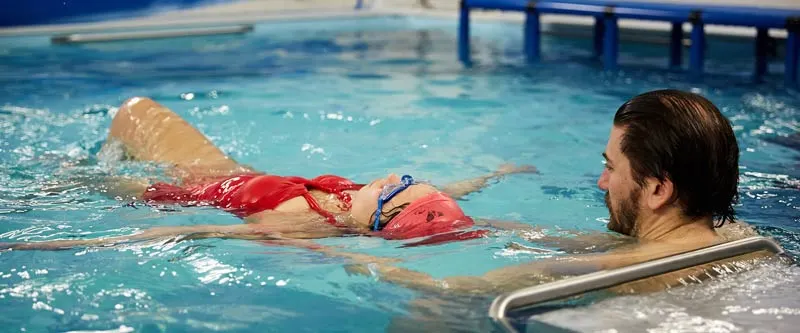
Most learn-to-swim programs, including Swim Australia and Royal Life Saving, are built on these five essential skills:
1. Breath Control and Submersion
Confidence starts with the breath. Learning to blow bubbles, hold your breath, and gently submerge your face reduces anxiety and builds trust in the water.
2. Floating and Body Position
Balance and buoyancy are everything. Floating on the front and back teaches you that the water supports you — you don’t need to fight it.
3. Kicking
Controlled leg movement provides propulsion and helps you stay afloat. The focus is on relaxed, steady rhythm — not speed.
4. Arm Movement
Arm strokes generate direction and momentum. We aim for smooth, controlled movements that create progress with minimal splash.
5. Breathing and Coordination
This is where everything connects — breath, balance, kick, and pull — forming fluid, efficient swimming.
Why the Basics Alone Aren’t Enough
At Swimly, we’ve worked with over 200 adults overcoming fear of water, alongside children perfecting technique and elite swimmers chasing state and national goals. And here’s what we’ve found: Technical drills alone don’t create confidence. That’s why we developed The Swimly 5 — a mindset-driven version of the fundamentals that helps people feel calm, aware, and in control in the water.
The Swimly 5 — A Smarter Way to Learn to Swim

1. Calm the Mind
Before learning strokes, we teach swimmers to breathe and relax. By releasing tension, your body naturally floats and finds stability.
2. Balance the Body
Floating isn’t about effort — it’s about alignment. We help you discover neutral buoyancy so you feel supported by the water, not scared of it.
3. Breathe with Ease
Rather than “holding” breath, we teach rhythm and flow — exhale fully, inhale calmly, and keep the body relaxed through transitions.
4. Move with Purpose
Every movement has intent. We refine technique so you move further with less effort, unlocking the freedom of effortless motion.
5. Flow with Confidence
This is where everything connects — mindset, movement, and rhythm. You stop thinking about swimming and start feeling it.
Why Swimly’s Method Works
Most programs stop at how to move. Swimly goes deeper — teaching how to connect with the water. That’s why our approach has helped adults overcome lifelong fears and turned hesitant swimmers into calm, confident movers in both pool and ocean. From our private Willoughby studio to ocean swim sessions and city pools, Swimly builds trust, control, and transformation.

Key Takeaways
The 5 basic swimming skills are breath control, floating, kicking, arm movement, and coordination. Swimly’s approach redefines these into Calm, Balance, Breathe, Move, and Flow. Confidence in water comes from trust and awareness, not just technique. Swimly helps adults and children alike master swimming through award-winning, personalised coaching.
Ready to Start? Do It the Swimly Way
If you’ve always wanted to swim but never felt ready — or if you’re looking to perfect your technique — start with the basics, but learn them the Swimly way. Join our Adult Water Confidence Program or book a Private Stroke Correction Session and experience what it means to truly feel at home in the water.
📩 Email: newclient@swimly.com.au
🌐 Explore more programs: https://swimly.developmentwithgdc.com/